Holistic Knee Recovery: Comparing Exercise, Joint Support and At-Home Programs
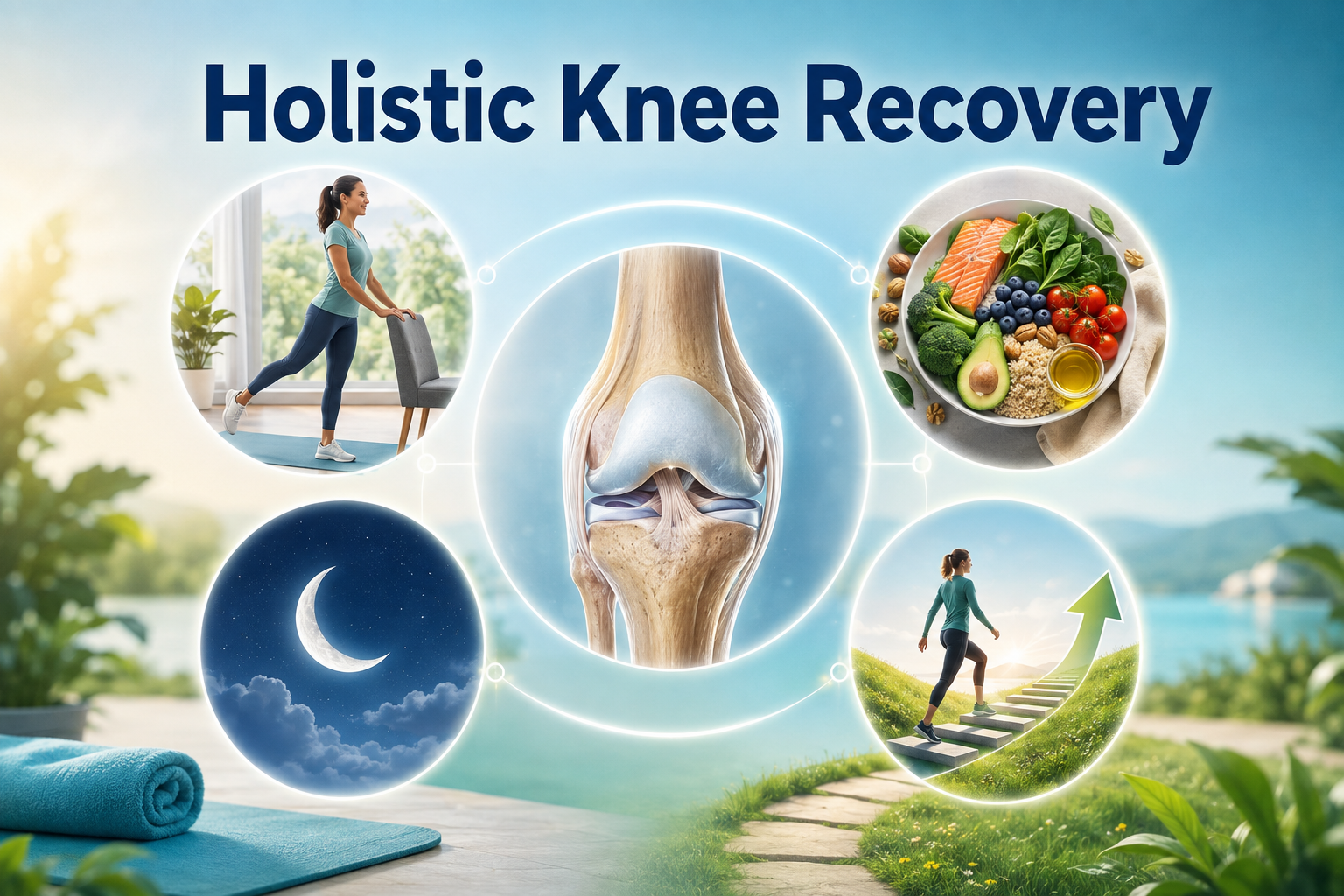
Holistic knee recovery means looking beyond one exercise, supplement, device, or symptom. Knee health is influenced by muscle strength, joint mobility, physical activity, body weight, sleep, nutrition, pain sensitivity, previous injuries, and underlying medical conditions. A thoughtful recovery plan considers how these factors work together instead of expecting one solution to repair every possible source of knee pain.
In our analysis, people are frequently presented with two very different approaches. One emphasizes nutritional support for cartilage, synovial fluid, and joint comfort. The other emphasizes movement, quadriceps activation, mobility, and progressive strength training. These approaches are not necessarily competitors, but neither should automatically be considered a complete treatment.
This guide connects our resources on joint health, cartilage and synovial fluid with our comprehensive knee rehabilitation and strength-training guide. It will help you understand where exercise, physical therapy, lifestyle changes, supplements, and structured at-home programs may fit within a responsible knee recovery strategy.
Medical disclaimer: This article provides general educational information and does not diagnose or treat knee conditions. Supplements and consumer exercise programs do not replace care from a physician or licensed physical therapist. Seek professional guidance before beginning a new program if you have significant pain, swelling, instability, neurological symptoms, a recent injury, or a history of knee surgery.
What Is Holistic Knee Recovery?
Holistic knee recovery is a whole-person approach to improving knee comfort, strength, mobility, and function. The word “holistic” should not be confused with unproven claims or alternative treatments presented as cures. In this context, it means examining the different factors that affect how the knee feels and performs.
A comprehensive plan may include:
- Identifying the probable cause of knee symptoms
- Maintaining or restoring comfortable joint motion
- Improving quadriceps, hamstring, calf, and hip strength
- Managing training volume and repetitive joint stress
- Supporting adequate protein and overall nutrition
- Addressing sleep, recovery, and stress
- Using medication or supplements appropriately
- Improving balance and walking mechanics
- Managing body weight when medically appropriate
- Obtaining professional evaluation when symptoms warrant it
The correct combination will differ from one person to another. A person with mild stiffness after inactivity may need a different plan from someone with patellofemoral pain, advanced osteoarthritis, nerve-related weakness, or a recent ligament injury.
Why One Knee Solution Is Rarely Enough
The knee is not an isolated hinge. It is part of a connected system involving the hip, thigh, lower leg, ankle, nerves, muscles, tendons, ligaments, cartilage, synovial membrane, and kneecap.
Even a high-quality intervention may address only part of that system:
- A supplement may provide certain nutrients but cannot retrain balance or restore lost quadriceps strength.
- An exercise routine may improve strength but cannot diagnose a torn meniscus, infection, fracture, or inflammatory disease.
- A massage device may temporarily change how the surrounding tissues feel but cannot replace progressive loading.
- Weight loss may reduce joint load but does not automatically correct weakness or poor movement control.
- Physical therapy may improve function but cannot guarantee that every painful sensation will disappear.
This is why responsible holistic knee recovery begins with the problem rather than the product. Before choosing a solution, consider what may be driving the symptoms and whether a professional examination is necessary.
The Four Foundations of Holistic Knee Recovery
1. Joint Mobility
A healthy knee needs sufficient flexion and extension for walking, standing, sitting, and using stairs. Pain, swelling, protective muscle tension, prolonged sitting, or previous surgery may limit this motion.
Gentle movement can circulate synovial fluid and reduce the temporary sensation of stiffness. However, forcing a swollen or injured knee aggressively into a painful range may make symptoms worse. Mobility work should be controlled, purposeful, and appropriate for the underlying condition.
2. Muscular Strength and Nervous-System Control
The quadriceps help straighten the knee, control the kneecap, and absorb force. The hamstrings, calves, gluteal muscles, and trunk also influence how the leg handles weight.
Pain and swelling can inhibit normal quadriceps activation. This means a weak-feeling knee is not always caused solely by a loss of muscle tissue. The nervous system may temporarily reduce how effectively the muscle is recruited.
Rehabilitation can progress from gentle muscle contractions to sit-to-stands, supported squats, step-ups, resistance exercises, and more demanding functional movements. The exact progression should reflect the person’s condition, balance, goals, and symptom response.
3. Joint Nutrition and General Health
Muscles and connective tissues require adequate nutrition. Protein, vitamins, minerals, essential fats, and overall energy intake all contribute to normal body function. No single food or supplement can guarantee cartilage regeneration, but nutritional deficiencies and poor dietary patterns may interfere with general health and recovery.
Supplements should be judged ingredient by ingredient. Consider the dose, clinical evidence, interactions, side effects, product quality, and whether the expected benefit is realistic. “Natural” does not automatically mean effective or risk-free.
4. Load and Recovery Management
Knees adapt to appropriate physical stress. Problems can arise when the amount of activity exceeds what the joint and surrounding tissues currently tolerate.
Training load includes more than formal exercise. Long walks, occupational demands, stairs, yard work, recreational activity, and time spent standing all contribute. A recovery plan should account for this total workload rather than treating exercise as the only source of stress.
Supplements Versus Knee Exercise Programs
Supplements and exercise programs are often marketed to the same audience, but they perform fundamentally different roles. A nutritional product is taken internally and may aim to support joint comfort or normal tissue function. An exercise program attempts to improve strength, mobility, balance, or movement capacity through physical activity.
| Consideration | Joint supplement | Exercise or rehabilitation program |
|---|---|---|
| Primary approach | Nutritional or botanical support | Movement, muscle activation and progressive loading |
| May help address | General joint-support goals, depending on ingredients | Weakness, reduced mobility, balance and physical function |
| Cannot directly provide | Strength, coordination or movement practice | Specific nutrients or correction of dietary deficiencies |
| Main limitations | Variable evidence, individual response and possible interactions | Requires effort, consistency and appropriate exercise selection |
| Professional guidance | Discuss with a clinician or pharmacist when appropriate | Seek a physician or physical therapist when symptoms are significant |
| Expected timeline | Depends on ingredients and personal response | Strength and function generally change gradually with consistent practice |
Our direct Joint Genesis versus Ageless Knees comparison examines these two approaches in greater detail. It explains what each product is designed to do, who might prefer one approach, and why some people may consider combining nutritional support with an appropriate exercise plan.
How Joint Genesis Fits Into a Recovery Plan
Joint Genesis is marketed as a joint-support supplement. Its potential role is therefore different from that of rehabilitation, exercise, or physical therapy. It should not be expected to build quadriceps strength, correct movement mechanics, or repair an acute injury.
A supplement may appeal to someone who:
- Already follows an appropriate movement plan
- Wants an additional joint-support option
- Understands that individual results vary
- Has reviewed the ingredients and serving information
- Has checked for medication interactions or contraindications
- Does not expect the product to replace medical treatment
People who are pregnant, nursing, managing chronic medical conditions, taking prescription medication, or preparing for surgery should discuss supplement use with an appropriate healthcare professional.
Before making a decision, review the evidence, customer experiences, limitations, refund conditions, and complete ingredient label. Our analysis of Joint Genesis customer results and reported experiences separates recurring feedback from promotional claims.
If you have completed that research and want to inspect the current product information, you can visit the Joint Genesis offer through our tracked link.
How Ageless Knees Fits Into a Recovery Plan
Ageless Knees is marketed as a structured at-home knee program involving guided movement and a handheld massage or stimulation wand. Unlike a supplement, its central value proposition involves completing a routine.
A structured program may be useful for people who struggle to organize their own exercises. It may provide a clearer sequence and reduce the temptation to jump between unrelated online videos. However, it remains a general consumer product rather than an individualized physical therapy plan.
Ageless Knees may be worth investigating if you:
- Prefer following a defined at-home routine
- Can exercise safely without direct clinical supervision
- Want to work on mobility and muscle activation
- Understand that consistency is required
- Are prepared to modify or stop movements that aggravate symptoms
- Recognize that the included wand does not replace active exercise
Consumer feedback can reveal practical concerns that may not be obvious on a sales page. Our guide to Ageless Knees complaints and customer feedback examines common criticisms, satisfaction patterns, usability concerns, and realistic expectations.
Readers who decide the routine is appropriate can review the current Ageless Knees program information here.
Can Supplements and Physical Therapy Be Combined?
In many circumstances, nutritional support and medically appropriate rehabilitation are not mutually exclusive. A supplement does not physically perform the exercises, and an exercise program does not supply missing dietary nutrients.
The more important questions are whether each component is safe, evidence-conscious, affordable, and relevant to the person’s needs.
A combined approach might include:
- Obtaining a diagnosis or professional assessment when needed.
- Following an individualized or condition-appropriate movement plan.
- Eating a balanced diet that supports general health and muscle recovery.
- Considering a supplement only after reviewing its ingredients and risks.
- Monitoring pain, swelling, mobility, strength, and daily function.
- Changing the plan when progress stalls or adverse effects develop.
The most important active element is often progressive movement. A supplement may support a broader plan, but it should not become a reason to avoid strength training, physical therapy, or necessary medical care.
Read our practical guide to combining supplements and physical therapy for knee health before using multiple approaches together.
Key takeaway: A combined strategy is not automatically better simply because it contains more components. Each part should have a defined purpose, acceptable safety profile, and realistic expected benefit.
How Long Does It Take to Rebuild Knee Strength?
Holistic knee recovery does not follow one universal schedule. The time required to improve strength depends on the starting condition, cause of weakness, age, exercise history, consistency, sleep, nutrition, pain level, and presence of an injury or operation.
Some people notice better movement confidence within the first few weeks of consistent exercise. Meaningful strength improvements often require longer. Recovery after significant surgery or injury may continue for many months.
Early improvements can result partly from the nervous system becoming more efficient at recruiting muscles. Larger structural changes in muscle capacity generally take more time. Progress may also occur in one area before another. For example, walking may become easier before descending stairs feels comfortable.
Recovery is rarely a perfectly straight line. A temporary flare-up after excessive activity does not necessarily mean all progress has been lost, but repeated flare-ups may indicate that the current workload is too high.
For realistic milestones and factors that influence the timeline, read how long it may take to rebuild knee strength.
Morning Knee Stiffness and What It May Mean
Morning stiffness may occur after the knee remains relatively still overnight. Osteoarthritis, inflammatory conditions, previous injury, sleep position, and the previous day’s activity can all affect how the joint feels upon waking.
A few minutes of gentle movement may help ordinary stiffness. Options can include ankle pumps, heel slides, brief knee extensions, or a short walk around the home. The purpose is to introduce motion gradually rather than force the knee immediately into a deep stretch.
The pattern and duration of stiffness matter. Prolonged morning stiffness accompanied by warmth, swelling, fatigue, or symptoms in multiple joints should be discussed with a healthcare professional because inflammatory conditions may require medical treatment.
Our guide to morning knee stiffness causes and possible solutions explains how to distinguish common movement-related stiffness from symptoms that deserve further investigation.
Why Knee Pain Can Feel Worse When Walking Downstairs
Descending stairs places a substantial demand on the quadriceps because they must control the body as the knee bends. This is an eccentric muscle action: the quadriceps produce force while lengthening.
The activity also increases demand around the patellofemoral joint. People with kneecap-related pain, quadriceps weakness, reduced ankle mobility, poor balance, or fear of loading the affected leg may find going downstairs particularly difficult.
Possible contributors include:
- Patellofemoral pain
- Quadriceps weakness or inhibition
- Knee osteoarthritis
- Reduced hip strength
- Limited ankle dorsiflexion
- Poor balance or movement confidence
- Tendon or meniscus irritation
- Attempting steps that exceed current capacity
Using a handrail, taking shorter controlled steps, and strengthening through a tolerable range may help. Persistent sharp pain, locking, instability, or swelling should not be dismissed as ordinary weakness.
Learn more about the common causes of knee pain while walking downstairs.
Natural Ways to Support Knee Health
“Natural” knee care should still be evaluated with the same critical thinking applied to other health interventions. The most valuable natural strategies are often familiar habits practiced consistently rather than dramatic remedies.
Stay Appropriately Active
Movement can help maintain strength, function, and joint mobility. Low-impact activities such as walking, cycling, swimming, or water exercise may be more tolerable than running and jumping during an irritated period.
Build Lower-Body Strength
Stronger quadriceps, hips, hamstrings, and calves can improve the lower limb’s ability to manage force. Exercise should progress gradually and reflect current symptoms.
Support Healthy Body Composition
When appropriate for the individual, reducing excess body weight may decrease the mechanical demand placed on weight-bearing joints. Weight management should be approached respectfully and should not be presented as the sole explanation for knee pain.
Eat for General Health and Recovery
A balanced diet containing adequate protein, fruits, vegetables, whole grains, and healthy fats supports general health. Dietary patterns are more important than expecting one food to rebuild cartilage.
Prioritize Sleep
Poor sleep can affect pain sensitivity, mood, exercise recovery, and motivation. A knee recovery plan that ignores sleep may overlook an important influence on how symptoms are experienced.
Use Heat or Cold Thoughtfully
Some people find warmth helpful for stiffness and cold useful after an irritating activity. These approaches generally provide temporary symptom management rather than correction of the underlying cause. Protect the skin and avoid extreme temperatures.
For a broader list of evidence-conscious strategies, visit our guide to natural ways to rebuild and support knee health.
Building a Personal Knee Recovery Plan
A simple holistic knee recovery plan can begin with five questions.
1. What Is My Main Limitation?
Identify whether the primary problem is pain, stiffness, weakness, swelling, balance, endurance, or fear of movement. A specific functional goal is more useful than the vague goal of having “better knees.”
2. Which Activities Matter Most?
Choose meaningful targets such as standing from a chair, walking for 20 minutes, gardening, climbing stairs, or returning to a recreational activity.
3. What Can My Knee Tolerate Now?
Find a starting level that does not produce a significant or lasting flare-up. This might mean shallow sit-to-stands, short walks, supported balance work, or exercises performed with less resistance.
4. How Will I Measure Progress?
Useful measurements may include walking duration, chair-rise repetitions, comfortable range of motion, stair tolerance, swelling, or next-day symptom response. Pain scores alone do not capture every meaningful improvement.
5. When Will I Seek Help?
Decide in advance which symptoms or lack of progress will prompt professional evaluation. This prevents months of repeating an ineffective self-treatment plan.
| Recovery area | Example starting action | Possible progress measure |
|---|---|---|
| Mobility | Gentle heel slides | Comfortable bending range |
| Strength | Supported chair rises | Controlled repetitions |
| Endurance | Short level walk | Duration without a lasting flare-up |
| Balance | Supported weight shifts | Less reliance on hand support |
| Recovery | Consistent sleep schedule | Energy and next-day readiness |
Warning Signs That Require Medical Attention
Home-based holistic knee recovery is not appropriate for every situation. Seek prompt medical advice if you experience:
- An inability to bear weight following an injury
- An obvious deformity or suspected fracture
- A knee that locks and cannot move normally
- Rapid, severe, or unexplained swelling
- Redness, unusual warmth, fever, or signs of infection
- Calf swelling or tenderness
- Chest pain or shortness of breath
- Progressive numbness or weakness
- Repeated knee buckling or unexplained falls
- Severe pain that continues to worsen
Symptoms that persist despite reasonable activity changes should also be evaluated. A physician or physical therapist may help determine whether imaging, medication, supervised rehabilitation, or another intervention is appropriate.
Holistic Knee Recovery Resource Center
Use these focused guides to explore the next part of your recovery research.
Product and Program Comparison
- Joint Genesis vs. Ageless Knees: Supplements or Exercise?
- Joint Genesis Real Customer Results
- Ageless Knees Complaints and Feedback
Knee Recovery Strategies
- Combining Supplements and Physical Therapy for Knees
- How Long Does It Take to Rebuild Knee Strength?
- Morning Knee Stiffness: Causes and Solutions
- Knee Pain When Walking Downstairs: Possible Causes
- Natural Ways to Rebuild Knee Health
Foundational Pillar Guides
- Complete Guide to Joint Health, Cartilage and Synovial Fluid
- Comprehensive Guide to Knee Rehabilitation and Strength Training
Frequently Asked Questions
What is the best holistic approach to knee pain?
There is no single best approach for every knee condition. A responsible plan may combine diagnosis, appropriate exercise, load management, nutrition, sleep, symptom relief, and professional treatment. The combination should reflect the cause of the symptoms.
Can supplements rebuild knee cartilage?
No supplement should be assumed to regrow missing cartilage or reverse advanced joint damage. Certain ingredients may support general joint health or comfort, but evidence and individual results vary.
Can exercise make knee pain worse?
An unsuitable exercise or excessive training dose can aggravate symptoms. Appropriate exercise can also improve strength and function for many people. Exercise selection, range, resistance, volume, and recovery should be adjusted to the individual.
Should I choose Joint Genesis or Ageless Knees?
The products represent different approaches. Joint Genesis is a dietary supplement, while Ageless Knees is an at-home movement program with a handheld device. The better fit depends on your goals, health status, budget, willingness to exercise, and professional recommendations.
Can Joint Genesis and Ageless Knees be used together?
Some adults may consider nutritional support alongside an exercise program, but compatibility does not guarantee effectiveness or safety. Review the supplement ingredients with a healthcare professional and make sure the exercises are appropriate for your condition.
How often should I perform knee-strengthening exercises?
Frequency depends on exercise intensity, diagnosis, recovery stage, and symptom response. Gentle mobility may be performed more often than demanding resistance training. Individualized guidance from a physical therapist is preferable following surgery or significant injury.
Is morning knee stiffness always arthritis?
No. Morning stiffness may be influenced by inactivity, the previous day’s workload, sleep position, injury, osteoarthritis, or inflammatory disease. Prolonged stiffness with swelling, warmth, or symptoms in multiple joints deserves medical evaluation.
Why does my knee hurt more going downstairs than upstairs?
Descending stairs requires the quadriceps to control the body while the knee bends and can increase demand around the kneecap. Weakness, patellofemoral irritation, limited mobility, or other knee conditions may contribute.
Final Thoughts on Holistic Knee Recovery
Holistic knee recovery works best when every part of the plan has a clear purpose. Exercise can improve strength, movement, and physical capacity. Nutrition supports general health. Supplements may provide additional joint support for some users, while symptom-management tools may make movement feel more approachable.
None of these options should be expected to diagnose an injury, cure arthritis, or guarantee cartilage repair. Meaningful progress usually comes from consistent, appropriately dosed actions combined with realistic expectations.
If you are deciding between nutritional support and a guided movement routine, begin with our Joint Genesis versus Ageless Knees comparison. It provides a side-by-side analysis of the products, their different purposes, likely users, limitations, and costs so you can make a more informed decision.
Medical References and Further Reading
- American Academy of Orthopaedic Surgeons: Knee Conditioning Program
- American Academy of Orthopaedic Surgeons: Knee Exercises
- Cleveland Clinic: Knee Anatomy and Function