What Is Synovial Fluid? How Joint Fluid Protects Your Knees
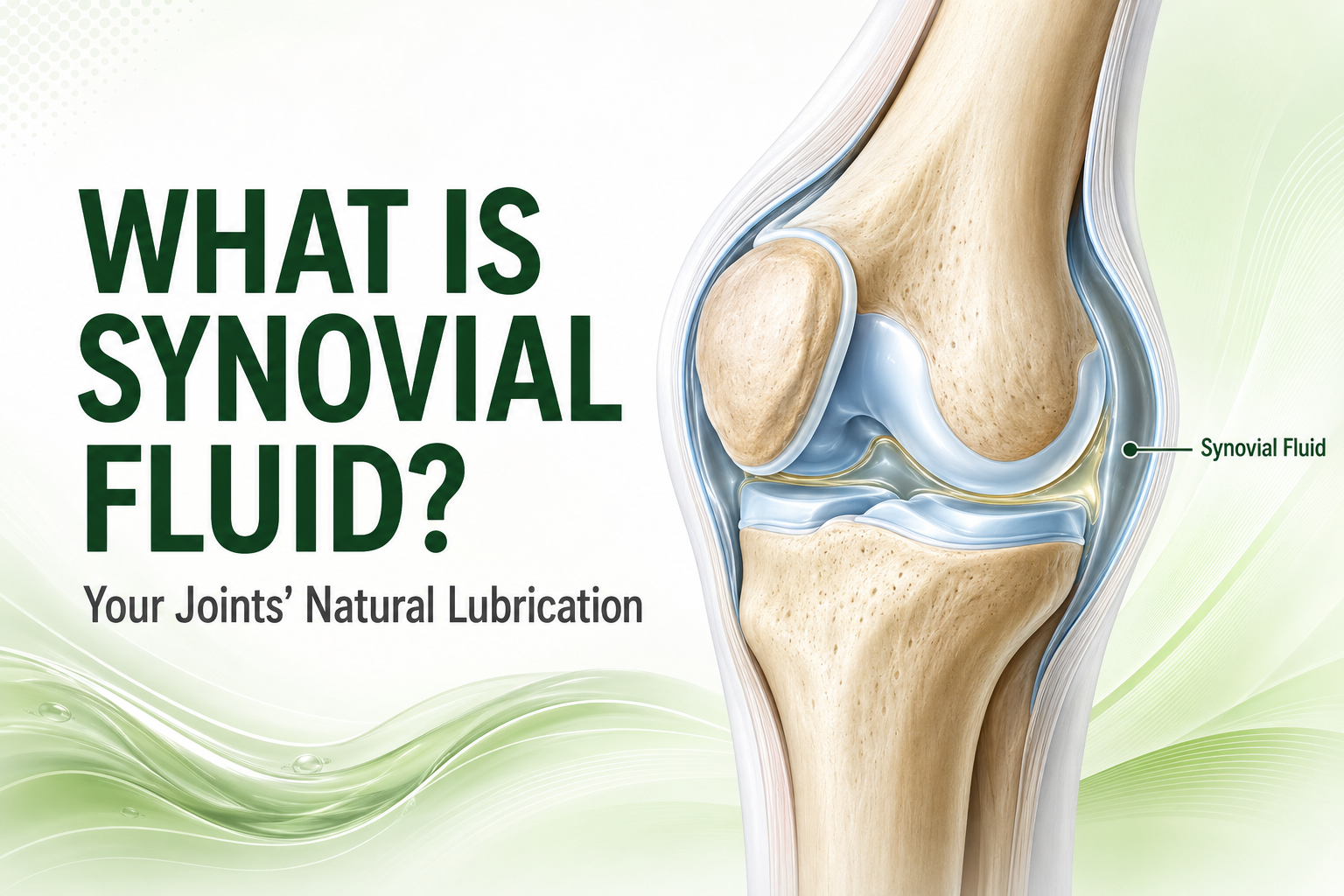
What is synovial fluid? Synovial fluid is the thick, slippery liquid found inside freely movable joints such as the knees, hips, shoulders, elbows, and fingers. It lubricates the surfaces of the joint, reduces friction, helps distribute force, and transports nutrients to articular cartilage.
In a healthy knee, only a small amount of synovial fluid is needed. The fluid spreads across the cartilage as the joint bends and straightens, helping the femur, tibia, and patella move with remarkably little friction.
Synovial fluid is sometimes described as the body’s version of motor oil. That comparison is useful, but incomplete. Unlike oil in a machine, joint fluid is living biological material that continuously interacts with cartilage, the synovial membrane, immune cells, and other tissues inside the joint.
Key takeaway: Synovial fluid does not simply fill empty space inside the knee. It lubricates moving surfaces, carries nutrients, removes waste products, and works with cartilage to manage the loads placed on the joint.
Where Is Synovial Fluid Located?
Synovial fluid is found inside synovial joints. These are the joints that permit the greatest amount of movement, including the:
- Knees
- Hips
- Shoulders
- Elbows
- Wrists
- Ankles
- Fingers and thumbs
- Toes
Each synovial joint is surrounded by a joint capsule. The capsule has a strong outer layer that helps contain and stabilize the joint. Its inner surface is lined by a thinner tissue called the synovial membrane, or synovium.
The synovial membrane helps produce and regulate the fluid inside the joint cavity. It does not normally cover the smooth articular cartilage at the ends of the bones.
Within the knee, synovial fluid circulates around the cartilage covering the femur, tibia, and back of the patella. It also interacts with structures such as the menisci, ligaments, fat pad, and synovial folds.
What Is Synovial Fluid Made Of?
Synovial fluid begins as an ultrafiltrate of blood plasma. As fluid moves through the synovial membrane, specialized cells add substances that give it its distinctive lubricating and protective qualities.
Its major components include:
| Component | Role in the Joint |
|---|---|
| Water | Provides the fluid base and supports the movement of nutrients and waste products |
| Hyaluronic acid | Contributes to viscosity, lubrication, hydration, and shock absorption |
| Lubricin | Helps reduce friction where cartilage surfaces contact one another |
| Proteins | Participate in transport, immune activity, and normal joint biology |
| Glucose and other nutrients | Help nourish cartilage cells |
| Electrolytes | Support the fluid’s chemical environment |
| Cells | Normally present in low numbers but may increase during inflammation or infection |
Healthy synovial fluid is commonly described as clear, pale yellow, and viscous. Its consistency is sometimes compared with uncooked egg white because it can form a string when stretched.
The appearance and consistency can change when a joint is inflamed, injured, infected, or affected by crystals such as those found in gout.
What Does Synovial Fluid Do?
1. It Reduces Friction
The most familiar synovial fluid function is lubrication. The fluid forms a thin layer between articular surfaces, helping them glide without damaging levels of friction.
Articular cartilage is already exceptionally smooth, but cartilage and synovial fluid work together. Neither should be viewed as the joint’s only protective system.
The fluid behaves differently depending on the speed and force of movement. Hyaluronic acid helps give it viscoelastic properties, meaning it can behave partly like a thick liquid and partly like an elastic material.
2. It Helps Absorb and Distribute Force
Walking, rising from a chair, and climbing stairs place compressive forces through the knee. Synovial fluid works with cartilage and the menisci to distribute those forces across the joint.
This does not mean the fluid functions like a thick cushion separating the bones at all times. Its interaction with the porous cartilage surface is more complex. When cartilage is compressed, fluid movement within the cartilage and across its surface contributes to load management.
3. It Nourishes Articular Cartilage
Articular cartilage does not have a direct blood supply. Chondrocytes, the cells within cartilage, rely partly on diffusion and fluid movement for nutrients.
As the knee is loaded and unloaded, fluid moves through the cartilage matrix. This helps transport nutrients toward cartilage cells and move metabolic waste products away.
This is one reason appropriate movement can be valuable for joint health. Complete inactivity does not give cartilage the same pattern of gentle loading and unloading that occurs during ordinary movement.
4. It Supports Smooth Movement
Healthy joint motion depends on the coordinated behavior of synovial fluid, cartilage, muscles, tendons, ligaments, and the nervous system. Synovial fluid helps the physical surfaces glide, while the muscles guide and control the movement.
If the quadriceps are weak or poorly activated, a person can still experience difficult or painful movement even when joint fluid is present. Likewise, excellent muscle strength cannot fully compensate for every form of cartilage damage or joint inflammation.
5. It Participates in Joint Defense and Cleanup
The synovial membrane contains cells involved in immune surveillance and removal of debris. This protective activity can become excessive during inflammatory joint disease, causing the synovium to thicken and produce inflammatory substances.
How Synovial Fluid Works in the Knee
The knee is a synovial hinge joint, although its motion is more complex than a simple door hinge. It bends and straightens while also allowing a limited amount of rotation and translation.
During movement, pressure changes distribute synovial fluid across the articular surfaces. Lubricin and hyaluronic acid help reduce friction, while the menisci improve load distribution between the femur and tibia.
The patella also glides through a groove at the end of the femur. This patellofemoral articulation experiences substantial compressive force during squatting, stair climbing, and rising from a low chair.
When looking at knee mechanics, it is therefore inaccurate to blame every grinding sensation or painful movement on “dry joints.” Symptoms can involve:
- Articular cartilage changes
- Meniscus damage
- Patellofemoral overload
- Tendon irritation
- Inflammation of the synovial membrane
- Muscle weakness
- Reduced quadriceps activation
- Hip or ankle movement limitations
- Ligament injury or instability
- Pain referred from another part of the body
Our complete guide to joint health, cartilage, and synovial fluid explains how these different structures work together.
Does Synovial Fluid Decrease With Age?
Aging can affect the composition and performance of joint tissues, but it is overly simplistic to say that the knees merely “run out” of synovial fluid.
Changes may occur in hyaluronic acid concentration, molecular size, cartilage composition, synovial membrane activity, muscle strength, and the way the joint responds to load. Osteoarthritis can also change the quality of the fluid and the biology of the surrounding tissues.
In an arthritic joint, inflammation may cause the synovial membrane to produce additional fluid. The knee can therefore be swollen with excess fluid while the fluid’s lubricating properties are less effective than those of healthy synovial fluid.
This explains an apparent contradiction: a person can have too much fluid in a swollen knee and still have impaired joint lubrication.
What Is a Knee Joint Effusion?
A joint effusion occurs when excess fluid accumulates inside or around a joint. In the knee, this is often called “water on the knee,” although the accumulated material is not ordinary water.
Possible causes include:
- Osteoarthritis
- Rheumatoid arthritis
- Gout or pseudogout
- Meniscus or ligament injuries
- Fractures
- Joint infection
- Bleeding into the joint
- Repetitive irritation
Excess pressure inside the joint can cause pain, stiffness, and reduced quadriceps activation. A large effusion can make it difficult to fully bend or straighten the knee.
The fluid can also move toward the back of the knee and contribute to a Baker’s cyst. A Baker’s cyst is usually a sign that another condition is causing the knee to produce excess fluid.
What Is Synovitis?
Synovitis is inflammation of the synovial membrane. The irritated tissue may thicken, become more vascular, and produce excess fluid.
Symptoms may include:
- Joint swelling
- Warmth
- Pain or tenderness
- Stiffness
- Reduced range of motion
- A feeling of pressure inside the joint
Synovitis can occur after an injury or repetitive irritation. It is also associated with osteoarthritis, rheumatoid arthritis, gout, infection, and other joint disorders.
Treatment depends on the cause. Trying to suppress swelling without identifying an infection or crystal-related condition can delay appropriate care.
What Is Synovial Fluid Analysis?
Synovial fluid analysis is a group of laboratory tests performed on fluid removed from a joint. The removal procedure is called arthrocentesis or joint aspiration.
During an aspiration, a healthcare professional cleans the skin and inserts a sterile needle into the joint. The fluid can then be examined for:
- Color and clarity
- Viscosity
- White and red blood cell counts
- Bacteria and other signs of infection
- Uric acid crystals associated with gout
- Calcium pyrophosphate crystals associated with pseudogout
- Protein, glucose, and other chemical markers
- Blood or fat that may suggest an injury
Synovial fluid analysis can help distinguish inflammatory, infectious, crystal-related, and traumatic causes of joint swelling. It can be especially important when a joint becomes suddenly hot, red, swollen, and painful.
Can You Increase Synovial Fluid Naturally?
The body regulates synovial fluid automatically. There is no reliable home method for manually “refilling” a knee with joint fluid. However, several habits may support the tissues responsible for normal joint function.
Use Regular, Comfortable Movement
Gentle movement loads and unloads cartilage, helping fluid and nutrients move through the joint environment. Walking, cycling, aquatic exercise, and appropriate range-of-motion work may be useful depending on the individual’s condition.
More movement is not always better. A knee irritated by excessive loading may need temporary activity modification and a gradual return to exercise.
Strengthen the Muscles Supporting the Knee
Strong quadriceps, hamstrings, calves, and hip muscles help absorb and control force. They do not manufacture synovial fluid directly, but they can reduce unnecessary stress by improving movement capacity.
Readers looking for a structured routine can compare the best at-home knee pain exercise programs.
Stay Adequately Hydrated
Synovial fluid contains water, so normal hydration supports overall physiology. However, drinking an extreme amount of water will not flush out inflammation or instantly increase the amount of synovial fluid inside the knee.
Hydration should be treated as a general health habit rather than a cure for joint pain.
Maintain a Sustainable Body Weight
Body weight affects the forces passing through weight-bearing joints. For people carrying excess weight, gradual weight reduction may improve symptoms and make movement easier.
This does not mean knee pain is always caused by body weight. Thin and athletic people can also develop arthritis, injuries, synovitis, and patellofemoral pain.
Eat a Nutrient-Dense Diet
A balanced diet provides protein, fatty acids, vitamins, minerals, and antioxidant compounds used throughout the musculoskeletal system. No single food has been shown to refill the knee with synovial fluid.
Avoid Repeatedly Ignoring Swelling
Frequent swelling can indicate that the joint is responding to excessive load, structural irritation, inflammatory disease, or another problem. Treating every episode as harmless “fluid buildup” may allow the underlying condition to persist.
Can Supplements Support Synovial Fluid?
Several supplements are promoted for synovial-fluid support, including oral hyaluronic acid, collagen, Boswellia, ginger, and glucosamine. Research on these ingredients is mixed and depends on the exact formulation.
Oral hyaluronic acid is especially relevant because hyaluronan is a major component of synovial fluid. Some human trials have reported improvements in knee comfort or function, but this does not prove that a capsule travels intact to the knee and directly replaces missing fluid.
Joint Genesis uses an 80 mg Mobilee® hyaluronic acid matrix along with Boswellia, ginger, French maritime pine bark, and BioPerine®. In our analysis, the formula is best viewed as nutritional joint support rather than a treatment that can cure arthritis or rebuild an entire knee.
Readers considering this approach can review the ingredients, evidence, and safety concerns in our complete Biodynamix Joint Genesis review. The current product offer is available through our Joint Genesis affiliate link.
Consult a doctor or pharmacist before using a joint supplement if you take medication, have allergies, are preparing for surgery, or have a chronic medical condition.
What About Hyaluronic Acid Knee Injections?
Hyaluronic acid injections, also called viscosupplementation, place a gel-like substance directly into the knee joint. The treatment is intended to supplement the lubricating and shock-absorbing properties associated with natural hyaluronic acid.
This procedure is not the same as taking oral hyaluronic acid. The route, concentration, and way the material enters the joint are different.
Evidence for viscosupplementation is debated. Some individuals report symptom improvement, while clinical guidelines and research reviews have not consistently found a meaningful benefit for routine use. A clinician can explain the expected benefits, cost, and risks for a particular patient.
Possible risks include temporary pain, swelling, bleeding, allergic reaction, and infection. Knee injections should only be performed by a qualified healthcare professional.
Common Myths About Synovial Fluid
Myth 1: Cracking Your Knuckles Uses Up Joint Fluid
Ordinary joint cracking is generally related to pressure changes and gas bubbles within the fluid. It does not mean that synovial fluid is leaking out or being permanently depleted.
Myth 2: Every Noisy Knee Is a Dry Knee
Knee noises may result from tendons moving, gas changes, rough cartilage surfaces, patellar tracking, or other mechanical factors. Noise without pain or swelling is not automatically evidence of a serious problem.
Myth 3: More Synovial Fluid Is Always Better
A swollen knee may contain excessive fluid because the synovial membrane is inflamed. Healthy joint function depends on fluid quality and tissue balance, not simply maximizing fluid volume.
Myth 4: Drinking More Water Immediately Lubricates the Knee
Adequate hydration is healthy, but water does not travel directly from the stomach into the knee cavity. The body tightly regulates the production and composition of joint fluid.
Myth 5: A Supplement Can Completely Replace Lost Synovial Fluid
Supplement ingredients may influence joint biology or symptoms, but claims that a capsule directly refills the knee oversimplify digestion, absorption, circulation, and tissue metabolism.
Myth 6: Rest Is Always the Best Way to Protect Joint Fluid
Short-term rest can be appropriate after an injury or flare-up. Extended inactivity, however, may contribute to weakness, stiffness, and reduced capacity. The goal is usually an appropriate amount of movement rather than complete avoidance.
When Should You See a Healthcare Professional?
Arrange an evaluation if knee pain or swelling persists, repeatedly returns, or interferes with ordinary movement. Seek prompt medical care for:
- A hot, red, or rapidly swelling joint
- Knee pain accompanied by fever
- Inability to bear weight
- A major fall, collision, or twisting injury
- A knee that locks or repeatedly gives way
- Visible deformity
- Sudden calf swelling or pain
- Unexplained bleeding or bruising around the joint
- Progressive numbness or weakness
A hot, swollen joint with fever can indicate septic arthritis, which can damage joint structures quickly and requires urgent treatment.
Final Thoughts: What Is Synovial Fluid?
Synovial fluid is a specialized biological lubricant found within freely movable joints. In the knee, it reduces friction, helps distribute force, transports nutrients to cartilage, and works with the synovial membrane to maintain a healthy joint environment.
Hyaluronic acid and lubricin give healthy joint fluid much of its slippery, viscoelastic behavior. When injury, osteoarthritis, gout, rheumatoid arthritis, or infection affects the joint, the amount and quality of the fluid may change.
The goal should not be to produce as much fluid as possible. A swollen knee can contain excessive fluid and still function poorly. Supporting joint health involves appropriate movement, muscle strength, healthy load management, adequate nutrition, and timely evaluation of persistent symptoms.
Now that you understand what synovial fluid is, continue with our complete guide to joint health and cartilage for a broader explanation of how all the parts of the knee work together.
Frequently Asked Questions
What is synovial fluid in simple terms?
Synovial fluid is the body’s natural joint lubricant. It is a thick, slippery liquid that reduces friction, helps cushion moving surfaces, and transports nutrients within joints such as the knee.
What color is healthy synovial fluid?
Healthy synovial fluid is typically clear to pale yellow. Cloudy, bloody, unusually thin, or discolored fluid may provide information about inflammation, infection, bleeding, or injury.
What produces synovial fluid?
The synovial membrane lining the joint capsule helps produce and regulate synovial fluid. The fluid begins as a filtrate of blood plasma and is enriched with substances such as hyaluronic acid and lubricin.
Does synovial fluid grow cartilage?
Synovial fluid helps nourish cartilage cells and supports the cartilage environment, but it does not guarantee cartilage regeneration. Advanced cartilage damage involves structural and biological changes that cannot be reversed simply by increasing joint fluid.
Does exercise increase synovial fluid?
Movement helps circulate fluid and nutrients through the joint and cartilage. Appropriate exercise may support joint function, but excessive loading can aggravate an already inflamed knee.
Can synovial fluid leak out of the knee?
The joint capsule normally contains synovial fluid. An injury or surgical opening can disrupt the capsule, but ordinary knee cracking or exercise does not cause the fluid to leak away.
Why does fluid build up in the knee?
Excess fluid usually develops because the joint is irritated or inflamed. Possible causes include osteoarthritis, injury, gout, rheumatoid arthritis, infection, and bleeding inside the joint.
Can knee fluid be drained?
Yes. A qualified healthcare professional can remove fluid through joint aspiration. The procedure may relieve pressure and provide a sample for laboratory analysis, but the fluid can return if the underlying cause remains.
Is synovial fluid the same as cartilage?
No. Synovial fluid is the liquid inside the joint cavity. Articular cartilage is the smooth tissue covering the ends of bones. They work together but are different structures.
Is hyaluronic acid the same as synovial fluid?
No. Hyaluronic acid is an important component of synovial fluid, but joint fluid also contains water, lubricin, proteins, nutrients, electrolytes, enzymes, and small numbers of cells.
Medical References
- Cleveland Clinic: Synovial Fluid—Composition and Function
- Cleveland Clinic: Synovial Membrane Structure and Function
- American Academy of Orthopaedic Surgeons: Knee Anatomy and Synovial Membrane
- American Academy of Orthopaedic Surgeons: Hyaluronic Acid and Viscosupplementation
- MedlinePlus: Synovial Fluid Analysis
- Merck Manual: Evaluation of Joint Symptoms and Synovial Fluid
Affiliate disclosure: This page contains affiliate links. If you make a purchase through one of these links, Let’s Rebuild Your Knees may earn a commission at no additional cost to you. Affiliate compensation does not change our responsibility to discuss evidence, limitations, and safety concerns accurately.
Medical disclaimer: This article is for general educational purposes and is not medical advice. It does not diagnose or treat joint disease. Consult a qualified healthcare professional about persistent knee pain, swelling, medication use, or supplement safety. Seek urgent care for a hot, red, rapidly swollen joint, particularly when symptoms occur with fever or an inability to bear weight.